What Pre-Paint Exterior Cleaning Is and Why It Matters Before a Repaint
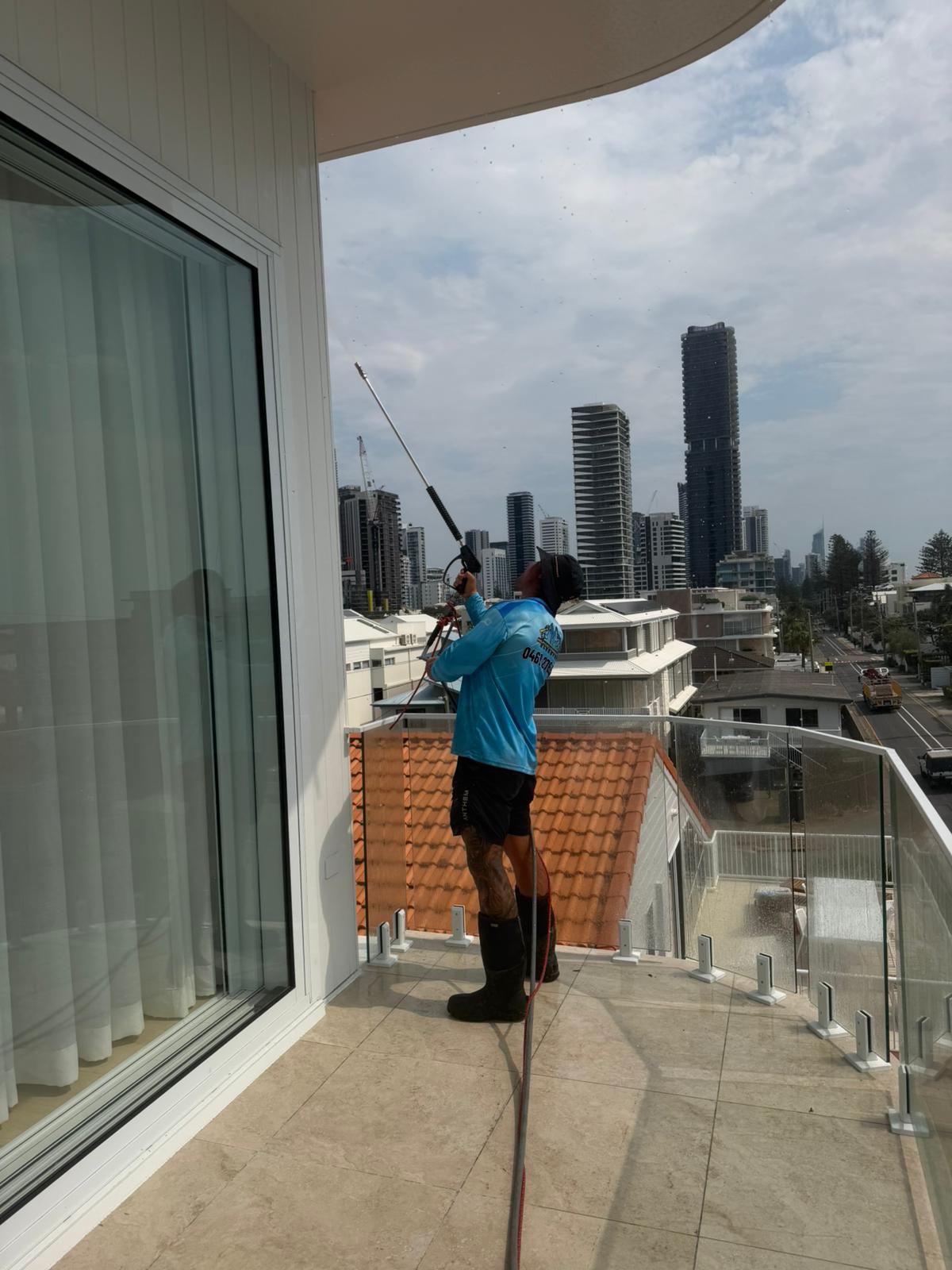
A pre-paint washdown is a thorough clean of the exterior surfaces that are about to be painted. This kind of exterior prep washing removes what stops paint from sticking: dirt and grime, salt residue, mould and algae, cobwebs and organic build-up, and the chalky residue that old paint sheds as it weathers.
Paint applied over a dirty or chalky surface bonds to the dirt rather than to the wall underneath. Over time that can show up as peeling, flaking or bubbling, and the new paint job wears out sooner than it should. Mould and algae that are painted over rather than removed can also keep growing beneath the new coat. A clean surface is one of the most useful things you can give a fresh coat of paint.
Salt is a Gold Coast factor too. Salt air settles on exterior surfaces and, if it is left there, it can interfere with how well paint sticks. Paint manufacturers’ own guidance for coastal areas advises washing salt residue off before painting, which is one more reason a proper wash comes first.
A wash also shows your painter what they are really working with. Once the grime is gone, cracks, flaking sections and areas that need repair are easy to see, instead of hiding under a layer of dirt.
Who Pre-Paint Washdowns Are For
Homeowners who have a repaint booked, or are about to book one, are the most obvious fit. If your painter has told you the house needs washing first, or you simply want the job done properly, professional pre-paint cleaning takes that step off your list.
Townhouses, villas and units get repainted too, and the same applies to strata properties. If you are a lot owner, or you are arranging a repaint for a residential complex, we can talk through the surfaces, access and timing before you commit to anything.
And if you are a painter or painting contractor, there is a section further down on booking a washdown ahead of your own jobs.
Pre-Paint Washdown vs General House Washing
A general house wash and a pre-paint washdown use many of the same methods, including soft wash on painted surfaces. The difference is the goal. A house wash is about keeping the exterior clean and looking its best. A pre-paint washdown is about the surface your painter is about to work on, so the focus shifts to whatever could stop paint from bonding, and to getting the wash into the joints, seams and trim edges.
General house wash
Main purpose: Keep the exterior clean and looking good
When it is done: Any time
Focus: Overall dirt, mould and grime
What follows: The job is finished
Pre-paint washdown
Main purpose: Prepare the surfaces so new paint bonds properly
When it is done: Before the painters start
Focus: Anything that stops paint sticking: chalking, mould, grime and salt, plus clean joints and trim edges
What follows: Repairs, sanding, priming and painting
If you are not repainting, a general house wash is probably what you need. If painters are booked, the washdown is the better fit. If you are not sure which suits your property, ask Jono when he quotes.
Surfaces We Prepare for Painting
Different materials need different handling. We match the method to the surface: soft wash for pre-painting on painted walls, render and other delicate surfaces, and higher pressure only on hard surfaces that can take it. Cleaning solutions are eco-friendly and biodegradable throughout, and Jono looks over the surfaces when he quotes the job.
Pre-Paint Wash: Weatherboard
Weatherboard homes collect dirt, mould and algae in the overlaps between boards and in sheltered, shaded spots. A soft wash cleans painted timber thoroughly without driving water hard into the boards, which is why it suits this kind of surface.
Pre-Paint Wash: Render
Render is porous, so it holds onto mould, algae and staining that a quick rinse won’t shift. Soft wash is the method we use on render, working the cleaning solution into the surface rather than relying on force, so the wall is clean and ready for the painter. Moisture matters on render too. Water trapped in the wall can carry salts to the surface, leaving white deposits known as efflorescence, and can cause bubbling under new paint, so the render needs to dry out properly before painting.
Brickwork Paint Prep Wash
Brick, concrete and other masonry hold dirt, algae and weathering, and an old coating that has lost its grip is no help to the new one. Because masonry varies so much in age and condition, the pressure and approach are matched to the surface in front of us, and Jono will explain what he recommends when he quotes. As with render, masonry needs to dry out fully before painting, because trapped moisture can bring salts to the surface as white deposits and cause bubbling or lifting.
Pre-Paint Wash: Fascia and Soffit
Fascia, soffits, eaves and trim collect cobwebs, dust and mould, and all of it needs to come off before painting. Jono holds a Working at Heights ticket, so higher eaves and fascia on multi-storey homes can be included in the quote.
Joints, Seams and Trim Edges Ahead of Caulking
Painters often fill and caulk joints, seams and gaps around trim before they paint, and sealant only sticks to a clean, dry surface. Dirt, cobwebs and mould sitting in those gaps can stop it bonding. The wash works into joints, seams and trim edges as well as the flat of the wall, so your painter starts with clean gaps as well as clean walls.